Categories
Uncategorised

A Grandfather’s Things

I narrowly avoided permanent bachelorhood, finding my better half midway through my 40s. I have no children. Before the big day, my wife and I had a conversation: “Do we really want to be chasing toddlers around in middle age?” The answer on both sides was no. For me, parenthood was probably never in the cards. On a good day I can take care of myself; being able to take care of other human beings for 20 or so years would be wildly optimistic.

Still, I sometimes wonder if I disappointed dad by not having a son to inherit his name. It’s a good name, a solid name. “Farmer.” It’s a name that’s earned through constant teasing in grade school and having to spell it out when someone simply can’t believe it’s actually someone’s last name.

If I’m being totally honest, dad was floored to hear I was finally getting married at all. I think he had resigned me to permanent bachelorhood years ago, so marriage was probably more than enough to hope for. Grandkids to carry on the name might have been the icing on the cake, but he already has six of them to carry on his genes, if not his name. Yet the thought of what will happen to his memory, and to the memory of my grandfathers, occurs to me whenever I rummage through my box of memories. That’s literally what it says on the box, “Memories,” scrawled in black marker on a tin kept safe in storage. Inside sleeps the bric-a-brac of my life and the lives of those who have gone before me.

A shoeshine kit, from an age when the world went to work in suits and ties, before we started Zooming in sweatpants.

I don’t remember my grandfathers; one died before I was born and the other when I was too young to have any memory of him. Ironically, even though I knew my grandmothers, I have almost no keepsakes of theirs, only ones from their husbands. I’m confident dad’s mementos will find a home with his grandchildren, but what will happen to those of my grandfathers?

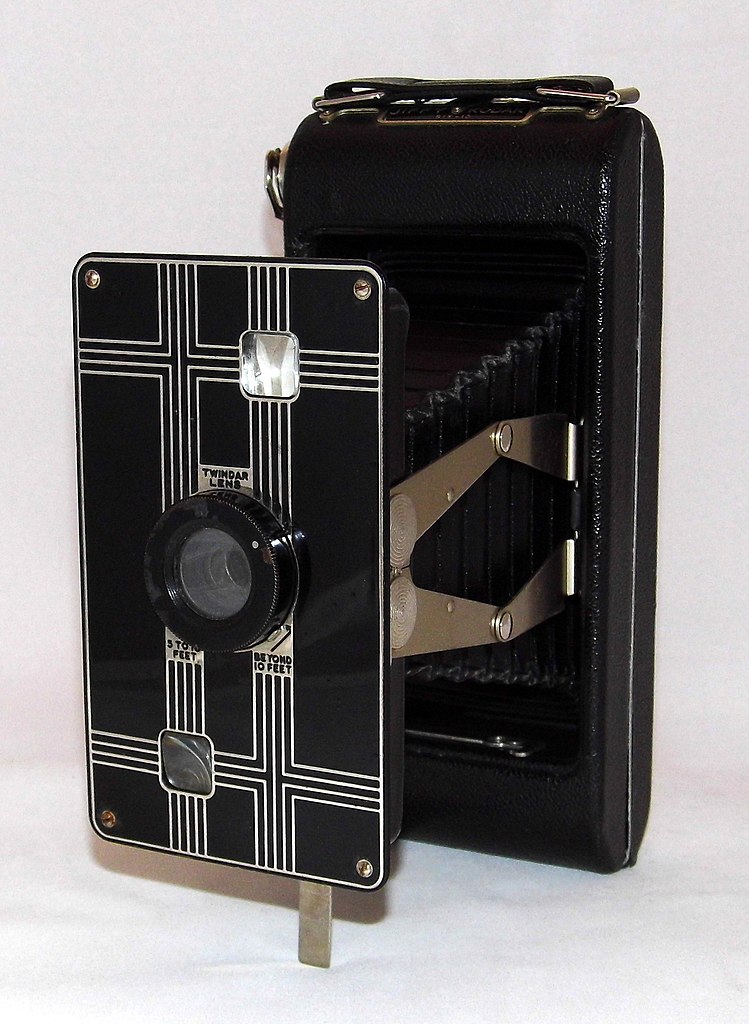
A Kodak Jiffy camera in its original leather case, with bellows that look like something Ansel Adams might have used.

I can bequeath these things to my nieces and nephews if they’re interested. But how much will the echoes of their great-grandfathers captivate them? Would these things have any meaning to them, or would they be discovered after my nieces and nephews pass away, hidden in a shoe box in a closet? Would their children wonder what they were, before adding them to the rack in an estate sale, to be picked up by some trinket-hunter, enchanted by the mint condition? Or would they go unloved and end up in a landfill? Will my nieces and nephews even have children to ponder these questions?

An engineering class ring from St. Francis Xavier University, 1958, as shiny as the day it was bought.

Unlike my grandfathers, my dad was a part of his grandchildren’s lives, and his mementos will hopefully have meaning for them. I think my nieces and nephew will hold onto such things because of the memories they evoke. But one day, these things will find themselves on a table at a sale, once those to whom their memories are entrusted have passed away.

A lighter sporting the badge of HMCS Uganda, our sole memento of Grandfather Ed’s WW II service.

The world can’t hold onto every token of the past; every shelf and box would fill with things gradually losing their meaning. At a certain point we have to let go of the past and its artifacts, and embrace the truth that the world is for the living; everyone in it will one day be forgotten.

Decorative pewter shot glasses, a gift from a German businessman who used to visit our house.

Sometimes I dig into the box of memories and flick Ed’s lighter, trying to coax a spark from the flint. Grandfather George’s shoeshine kit still smells of polish. I think of the stories told to me about these men, from Ed’s shenanigans to the cottage George built with my father in Cape Breton.

A fishing knife, with an edge honed endless times for trout hauled out of brooks across Nova Scotia.

Sometimes I poke through my own keepsakes, and wonder what will become of them, a former bachelor’s things.

A brown felt fedora, faded to a tobacco colour on top from the relentless sun in Alberta’s badlands.

Playbills from the amateur theatre I’ve acted in, from the Fringe to community shows and beyond.

Copies of newspapers from Sept 11, 2001, my generation’s Pearl Harbor.

Nothing lasts forever, but maybe someone will go through a box that contains something from Uncle Mark or Poppa Fred and take a moment to wonder what we were like. Ultimately, I know the fate of everyone’s material memories, because I lived next to one of Toronto’s biggest antique markets. On a given Saturday, I could be found wandering through the aisles, careful not to seem too interested, lest I get pulled into a sales pitch. I saw the same porcelain figurines mom collected, camera models dad probably used, copies of vinyl records I listened to as a kid. Sometimes I’d pause and handle things just to relive those memories.

And then I would move on, to browse a collection of other peoples’ memories, occasionally imagining the lives behind them. At the end of the day, the vendors would pack up everything that wasn’t sold, and try again the next weekend to pique someone else’s nostalgia or imagination of lives they never knew.

Categories
Life

Farewell to Ballybrophy

I had it all planned. I’d waltz into the pub, and the bartender — casually wiping down the bar between patrons — would ask me what I wanted. I’d say I was here to pay a debt. He’d look at me quizzically, and I’d tell him the tale of my grandfather, Ed Brophy, who criss-crossed the Atlantic in WW II on convoy escorts, trying to keep the transports safe from U-boats. One story is that a ship he was on was torpedoed and split in two. One half sank while the other stayed afloat long enough to rescue the men on board. He was on the lucky half.

Ed was Irish through and through, by inheritance but not by passport: we think his grandfather came over in the 1880s. Ed fit every Irish stereotype: a consummate joker and a dedicated drinker, blessed with the gift of gab and a wicked sense of humor. I remember seeing a photo of him at a St. Patrick’s Day party, one half of a duo keeping a drunken friend in between them upright. One day my sister pointed out he was the one in the middle, not the help.

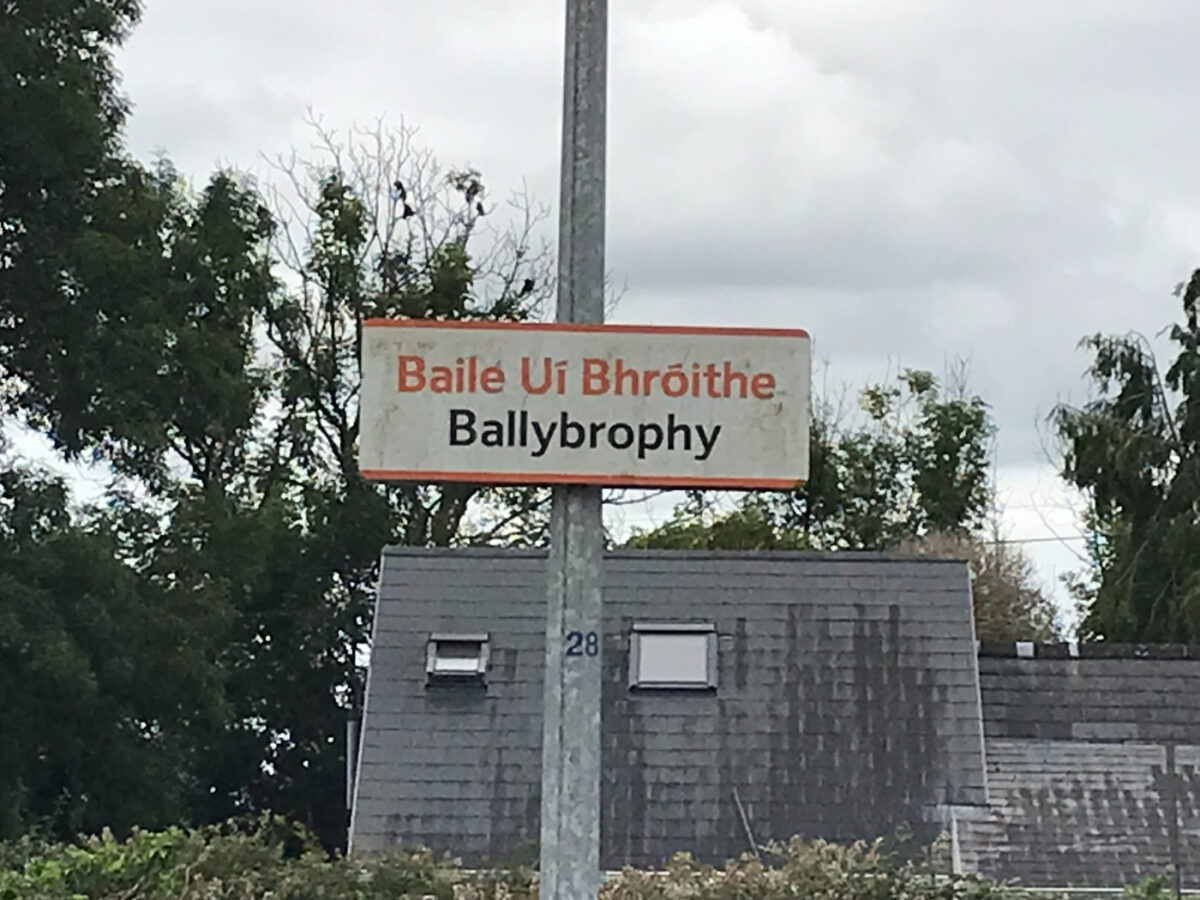
Ed was full of stories. One was that after an Atlantic crossing he paid a visit to the village of Ballybrophy in Ireland, the nominal seat of the Brophys. On arriving at the village pub, he proudly proclaimed he was a Brophy and he’d buy a drink for any Brophy who’d come forward. There were apparently a lot of Brophys in Ballybrophy (shocking, I know). So many came forward that Ed quickly realized he didn’t have enough money to cover the bill and escaped out the back.

It’s a great story. I have no idea if it’s even half true, but that’s the great thing about great stories: their accuracy is less important than their ability to capture our imaginations. This one captured mine, and I resolved to pay back Ed’s debt if I ever made it to Ballybrophy.

I never thought I’d have the chance until my sister decided we needed a homeland tour. I was initially skeptical of the idea of revisiting our Irish roots: the last Irishman in our family was probably born 170 years ago. What connection did we have to them and to Ireland? When someone asks, “what are you?” I say I’m Canadian, whether they’re asking about geography or identity. A century and a half have severed the ties to the old country. I liken it to being shipwrecked on an uncharted Island: there’s no way back to “where I’m from.” Time has erased the route. Even if I wanted to return, who would I return to?

Not only that, but half the family tree’s Irish and the other half’s a mix of English and Scottish. If we’re Irish, it’s by choice as much as by blood. That’s the funny thing about identity: ultimately, it’s a matter of what you choose to call yourself.

But the music, traditions and culture of Ireland live on in Canada’s east coast where I grew up. That much is in my blood. I took the journey, not so much to reconnect to the homeland, but because it promised to be a great vacation. Ireland is beautiful, the people are great, and the butter is unbelievably good. Some of the tales I’d been told turned out to be true: there are a lot of potatoes consumed, it is often quite damp and many folk do enjoy a drink or two.

But Ballybrophy is not what it must have been in WW II, much less in the mid-19th century. The train station is now almost a whistle stop. Half the buildings are abandoned. A water pipe for filling steam locomotives that haven’t visited in who-knows-how-long stands forlorn on the platform.

We wandered around and took a few photos. I looked in vain for a pub that might answer to the description of an antiquated village roost, something that looked at least a century old. There was none. A train pulled in, a few people got off, someone got on, and we departed on our little tour bus. The bumpy, winding back roads to our lodgings afforded ample time to reflect on what home really is.

Home isn’t where you want it to be. It’s not where you imagine it is. It’s neither the wellspring of romantic notions, nor the stuff of legends. Home is prosaic and everyday. It’s where your cat, your spouse and your kids are. It’s where you burned your first curry and where you mourn the loss of those you’ve loved. It’s where you can’t seem to fix the drip on the damn kitchen sink and where you held your housewarming. It’s a thousand tiny things and the bigger ones that make a life.

We all tell ourselves stories to embellish our world, or to make sense of it. Home is where we eat and sleep and live as we craft those stories. It’s the place where we dream about all the other places we’ll come home from.

After we returned to our accommodations, I looked up Ballybrophy on Google maps and found a pub down the road. We missed it. Maybe it’s the same one Ed wandered into that day in the 1940s. Maybe it isn’t. Maybe the whole thing was just a great story told by a great storyteller, and never happened.

But if the owner of the Green Roads Lounge Bar in Ballybrophy, Ireland, wants to contact me, I’ll send you 20 euros to buy a round for a few people and we’ll consider Ed Brophy’s debt paid.

Categories
Fighting Disinformation

Coping in the Age of Disinformation: Part 10 – That’s a Wrap

Over the past couple of months I’ve posted ten stories about disinformation and how to confront it. About 120 people have seen them: not bad, but no stampede, and certainly nowhere near enough to move the needle even a tiny bit vs. the propaganda and disinformation facing us. I’m neither a renowned psychologist nor a syndicated columnist, so I never expected the world to rush to my blog and soak up my point of view.

So why say something you know people aren’t going to pay much attention to? Why do something you know isn’t going to be that effective?

The answer is simple: to be heard.

When someone joins a protest, they don’t expect to tip the balance themselves. They protest to do something: to register their anger, provide an outlet for their dissent and feel that — however small — they made themselves heard. Hopefully, in that process they contribute to something bigger than themselves, something which actually could make a difference.

That’s what I did.

Every day I see people falling victim to propaganda and B.S., making terrible decisions in the process. Whether it’s anti-vaccination, QAnon, Stop the Steal or something else, as a society we’re falling for lies more frequently than ever. When people start believing what they want to hear, ignoring evidence and tripping over their own biases, our ability to make good decisions starts evaporating.

So I decided to speak up.

The very first time I realized it wasn’t ok to be silent was when I saw a video of a baby with whooping cough, and it broke my heart. I don’t know the background: I have no idea whether the parents immunized their baby, whether the child wasn’t old enough for the vaccine,  whether the parents  bought into anti-vax conspiracies, or something else. But I do know that anti-vaccination disinformation is rampant, and contributing to a resurgence in preventable diseases. And that’s just one type of disinformation.

Watching that video made me realize that it’s not ok to normalize dangerous, hurtful things. Even if you feel like you’re just shouting into the void, doing so has meaning. That’s one more person who didn’t stay quiet, one more voice that contributes to a collective shout.

Disinformation is the biggest menace facing society, because it enables all the other lies that threaten us. I thought the best way I could have some effect was to do what I do best — write — and see if I could reach anyone, to get them to think about the messages they’re receiving. If I could change even one person’s point of view, get them to challenge their assumptions and think differently, I’d consider my writing a success. I thought of all the times people much braver than me spoke up in dangerous situations, and realized raising my voice was the least I could do.

I didn’t want to look back years from now, as things get worse, and have to say I did nothing.

If we can collectively shine a light on societal lies and force some to scurry back into the darkness, then we’ve achieved something. If I can play the tiniest part in making that happen by speaking out, then I’ve achieved my goal.

Keep questioning.