Categories
Uncategorised

Dreams of Science

Some kids dream of being actors or architects, dancers or doctors, pilots or painters. I dreamed of being a nuclear physicist.

I was born a science nerd. Summers were spent in computer camp and mini-university, and in begging mom to take me to the local museum for the umpteen-millionth time. Even my basic literacy was driven by science: I wanted to read my Album of Dinosaurs on my own, and stop nagging mom.

And what wasn’t to love about science? It promised to unroll the blueprints of the universe and let me peer inside, revealing its secrets through a complex dance of theorems and numbers. The love affair started with dinosaurs, but in junior high school nuclear physics grabbed me, starting with tales of the Manhattan Project, and the race to dig ever deeper into the subatomic world. Each year the brightest minds on the planet discovered exotic new particles with names like gluons, neutrinos and quarks. The machines used to find them were impossibly massive and complicated, particle accelerators the size of Halifax, smashing subatomic bits together near the speed of light, birthing new and even more exotic species of matter. How could I not be awestruck?

I became enamoured of the high priests behind these discoveries, and drank up everything I could find about them: Einstein, Bohr, Feynman, Fermi, Heisenberg…. These were legends, the towering intellects of their time. They seemed to exist on the very edge of what was humanly intelligible, uncovering the fabric of our reality with each passing year. I ached to be like them, an explorer of the infinite and minute world around and inside us. I wanted to join that fellowship in unlocking the secrets of the universe!

Just one thing stood in my way: math. More specifically, how terrible I was at it. No matter how much you might want it, you’ll never get admitted to the high priesthood of particle physics with a 55 and 54 in grade 11 and 12 math.

It wasn’t like I didn’t try, and extraordinary steps were taken to remedy the situation: dad conscripted my math major sister to tutor me, but to no avail. My marks barely budged. So I was effectively shut out of the science party, an uninvited guest. I could peer through the windows and tap on the glass, but no matter how much I wanted in, I knew I’d never have what it takes for membership in the club.

Even if I had never dreamed of science, math and physics were preordained for me. As the son of an engineer, there was no question of not taking university prep courses in both. Dad was every bit as worshipful of science as I was. In fact, he’s probably the source of my reverence. Devouring his cast-off copies of Popular Science and Scientific American, and the books in his library, undoubtedly planted the seed.

I never asked if he was disappointed in me. I never really wanted to know. I’m sure he was, at least a little. Science and math were a centre of his world, but there wasn’t a lot I could do to turn my abysmal grades around. The closer I got to hard math, the more dreadful I did. Biology was fine. Chemistry was passable. Physics was downright poor, and by the time I got to pure math I was drowning.

Every little boy wants to earn his father’s admiration, to feel his pride. I knew I never could in the ways that were such a part of his life. But at a certain point everyone finds a way to move on from the shadows of their childhood, or they become prisoner to it. After high school, I put dreams of science away, and studied English and then Journalism, before reinventing myself as a web designer. I felt accomplished enough, but in the back of my mind I still wore a dunce cap in the fields I wished came naturally, the things I still felt really mattered.

Years passed until a pesky idea started buzzing around my subconscious: try again. I’m not sure how it became a plan. I think I came up with the idea that I needed to upgrade my math to get into more hardcore IT disciplines. But I knew the real reason: the desire to shut down the voice in the back of my head that had never stopped whispering, “You’re not smart enough. You’re not good enough.”

I signed up to do grade 12 math again, sweated it out and got a 92. A small victory, but I felt vindicated, that maybe I was capable of more. It was all the redemption I needed at the time, so I filed away any notions of going further.

Until 2022. That’s when a bomb called ChatGPT exploded in the work world. Now anyone can use artificial intelligence to draft copy, create websites, write code and much more. Knowledge workers everywhere (myself included) started worrying about being replaced by machines.

If you can’t beat ‘em, join ‘em: I decided to dive deep into AI, specifically the machine learning behind things like ChatGPT. That means math. It also means another shot at quieting that voice in the back of my head that had never truly shut up.

I signed up for a university course in statistics and got an A+. It felt good, maybe even a little healing. I started to entertain the idea that I might actually not be hopeless. I got a B+ in calculus, a respectable grade in a field I always thought was rocket science. The feeling of competence, of power kept growing. I’m finishing linear algebra as we speak, and the grades are ok so far. If it works out, I’m on to probability, advanced calculus and who-knows-what next.

It feels like a door has opened, and things I thought I was incapable of no longer seem out of reach. In my dreams, I keep going until one day I’ve earned a data science degree. I want that piece of paper that proves I’m smart. On that day, the monkey that’s been glued to my back for decades is lying flat on the ground, staring up and muttering “You win.” I’ll have proven to myself and to dad that I really can do it. I’ll have earned an invitation to the club.

In the dream, I’m at my graduation ceremony. Dad’s watching remotely from his seniors facility, and I hold up my diploma for him to see. Or maybe it’s too many years from now, and he’s no longer with us. If that happens, I’ll lift my parchment skyward for him, because in spite of aspirations to be a man of science, I choose to hope there’s something beyond this vale of tears, a place we go after the end. That’s not very scientific of me. Call it a hunch.

Either way, I slowly unroll my diploma, hold it up, break it into a smile, and say, “Guess what dad: I’m a scientist.”

Follow-up: I got an A- in linear algebra. The dream continues.
Categories
Life Thoughts Toronto

Accidentally Torontonian

It was only supposed to be a year: move to Toronto, get the certificate, move back to Calgary and continue with life.

23 years later, the move back to Calgary hasn’t happened. I have become, accidentally, Torontonian.

That was never the plan. I never had any desire to move to the Big Smoke.
Growing up on the east coast, Toronto seemed incredibly distant, a mysterious chunk of population somewhere past Montreal where folks moved later in life, and from where repairmen ordered parts for your fridge.

Later, it gained an unfortunate reputation as a breeding ground for snobbery. I remember the handful of kids transplanted from Toronto. Young and naive, many of them assumed us yokels would be awed by their big city pedigree, and flaunted it accordingly. That was a bad idea that backfired consistently, leading to ostracism and the conclusion that TO was a jerk factory.

After finishing school, I was faced with a decision: Halifax’s economy was small and sputtering, and I felt the need to move somewhere with more opportunities. Toronto’s economy was in the dumps, Vancouver was too expensive, I’d already lived in Ottawa, and I didn’t think my French was good enough for Montreal. Calgary beckoned with an oil economy firing on all cylinders, and I made the leap.

Soon after landing, I discovered something Calgarians share with Haligonians: antipathy for Toronto. The more folks I met, the more I realized those feelings of resentment travel across our great land. In fact, the unifying force in our country isn’t the great outdoors, maple syrup, poutine or even hockey: it’s animosity for Toronto.

Some of that has nothing to do with the town itself. It’s probably aimed at residents of every big city around the world, from Beijing to Buenos Aires. I think it stems from the inhabitants’ sense that they’re from somewhere just a little more sophisticated, important or awesome than anywhere else. I breathed that in when I landed in Hogtown in 2000.

I loved Calgary. I had no intention of leaving, until I hit a ceiling at work and needed a diploma to keep moving up. I found a program at Humber College, packed everything in boxes and bought a one-way ticket, confident I’d return in a year.

Toronto didn’t impress at first: it felt too big, impersonal and uncaring. It seemed less like a city with an identity or personality, and more like a sea of people crammed together on top of each other.

That feeling started to change when I moved to a friendlier neighbourhood, and found parks and shops I liked, a favourite pub and a go-to coffee shop. I started to discover what there was to like about this big fat city. There were neighbourhoods branded everything from “Little Italy” to “Little Tibet”. There were festivals and a theatre scene I stumbled into after an acting class. There were the bucket list concerts I finally got to see, museums, restaurants and all the other things tourist bureaus stuff into ads.

I ended up staying another year. I found a job and then a girlfriend. I got another apartment. I found another job and another girlfriend. I kept discovering more things to like about the city: bike trails, the islands, ravine hikes and more.

Years passed with the plan to move back to Calgary quietly receding in the rear-view mirror but never overtly abandoned. And then something quite unexpected happened: I started becoming Torontonian.

I’ve transformed, and I doubt the me from 23 years ago would recognize the current one. I’ve become that guy, the infinitely impatient one muttering under their breath at people lollygagging on the sidewalk when they’ve got places to be right now. (Could you walk any slower, buddy?) I talk about how the vibe in places like Kensington Market needs to be protected from gentrification, as if “vibe” were something that shows up on Google Maps. I read blogs and magazines about the city as often as I read ones about Canada itself. And I’ve embraced the idea that there’s something impressive about living in the biggest city in the land.

Recently I had to confront just how Torontonian I’ve become. Part of me will always hate myself for admitting it, but one night in front of the TV — how can I really be saying this?

I found myself cheering for the Leafs.

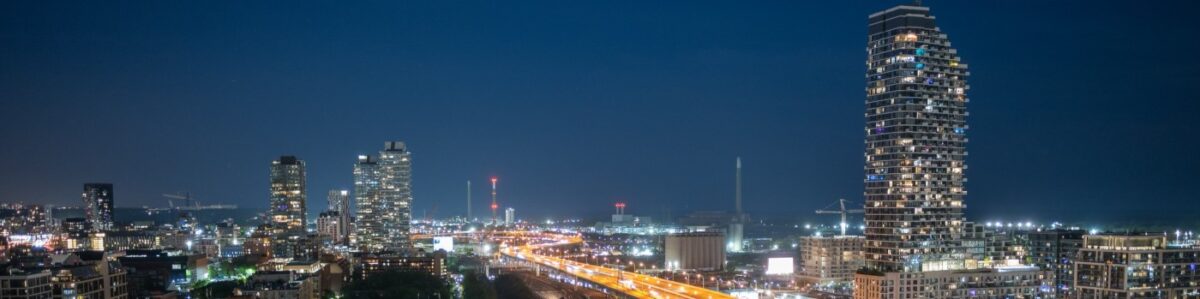
You can’t spend 23 years somewhere and not have it change you. Halifax will always be home, because home is where the heart is. But home is also where you hang your hat, and that’s Toronto. It’s where my condo leers over the perennially pissed-off drivers on the Gardiner Expressway. It’s where my cats constantly fight and make up. It’s where I found my wife, and where all but a few friends live. It’s the city that needs constant reassurance, but which is somehow quietly certain it’s the Centre of the Universe.

That’s what makes a good city great: a balance of contradictions.
A friend had a theory that life sorts you into the city in which you truly belong, by size, temperament and so on. Calgary is young and a little conservative. Ottawa is bureaucratic, well-planned and restrained. Halifax is friendly and loves a good time.

And Toronto? Well, Toronto is never satisfied. It obsesses about its shortcomings, even as it lands near the top of “best cities in the world” lists, a pessimism born from privilege. Toronto is the commercial, financial and cultural centre of the country even as it dreams of becoming New York City when it grows up. It’s the centre of its universe, but also the centre of self-doubt, perpetually comparing itself to everywhere around it.

That describes me a little: a collection of contradictions. It’s what endears me to the city. Like me, Toronto doesn’t have just one identity. At a certain point a city becomes too big for that, and its identity becomes the sum of its parts. Or maybe that’s way too Zen and Toronto is just like every other big city, with its good, bad, beauty, ugliness and endless complexity.

By my calculation, sometime in 2025 I’ll have spent more than half my life here. Assuming I last long enough, will I retire and end my days here? Will I move back “home” to Halifax? Maybe I’ll go back to Calgary. Maybe I’ll find a villa in Italy. Who knows? But this town has shaped me as surely as any other has.

I have become, unexpectedly, Torontonian.

Categories
Life

My Goodbye Tour

I’m 52, comparatively young for some, but old for more. To me it’s indeterminate, but closer to the far end of the spectrum than the start. I think about that far end more and more, reminded of my own mortality by the growing count of friends and family who have fallen victim to disease, accidents or other ends. Who knows? I might drop dead in the next moment from some terrible undiagnosed ailment, an accident, a falling piano … the list is endless. Or, medical science might take its next great leap forward and finally discover the fountain of youth.

I’m not taking any chances, and I’m not waiting for the fountain to appear. I’m starting my goodbye tour. A goodbye tour, not a bucket list. The latter is grandiose, a willful denial of mortality by indulging every suppressed travel urge and risky behaviour that’s ever haunted you. It’s the stuff of midlife crises, Hollywood and too many Paulo Coelho novels.

My goodbye tour is about little things, the legion of small but non-trivial moments that make a life. If I’m lucky enough to lead a long one, at the end I have a hunch I’m not going to be sprawled on my deathbed muttering, “God, I regret not seeing Machu Picchu.” That’s too big a thing to haunt me, too grandiose. Bucket list items aren’t woven into the fabric of our lives; the little things are. They’re the everyday, but are by no means mundane companions on our journeys around the sun. They have wormed their way into my heart through simple repetition and familiarity. Isn’t that how a stranger becomes a friend, after all?

Toronto’s High Park in the sun, down by the pond where gentlemen anglers gather to catch carp. Or is it perch? Who knows?

Elias’s falafel joint on Jarvis, so I can hear him try unsuccessfully to sell me an apple cake for the umpteen-millionth time.

The bike trails by the Don River, where new pathways beckon, if the hidden tree roots don’t dump you on your butt first.

Those are the things I think I’ll miss if I live long enough to one day find myself propped up on a pillow, wondering if I’ll shuffle off this mortal coil during my next nap. They’re the things that have found a way into my heart while the Alhambra, Empire State Building and Louvre haven’t. Those are amazing things. They enrich our lives. They help us dream and take us outside our little existences to see a bigger world.

The unintended consequence of looking at our little lives from outside is that we can see what actually makes a life, and it’s not the broad strokes, the grandiose swooshes of jetting off to another exotic location. What makes a life are the little things, repeated, that form a foundation and help us understand that the most heartfelt parts of life are often the smallest and most subtle.

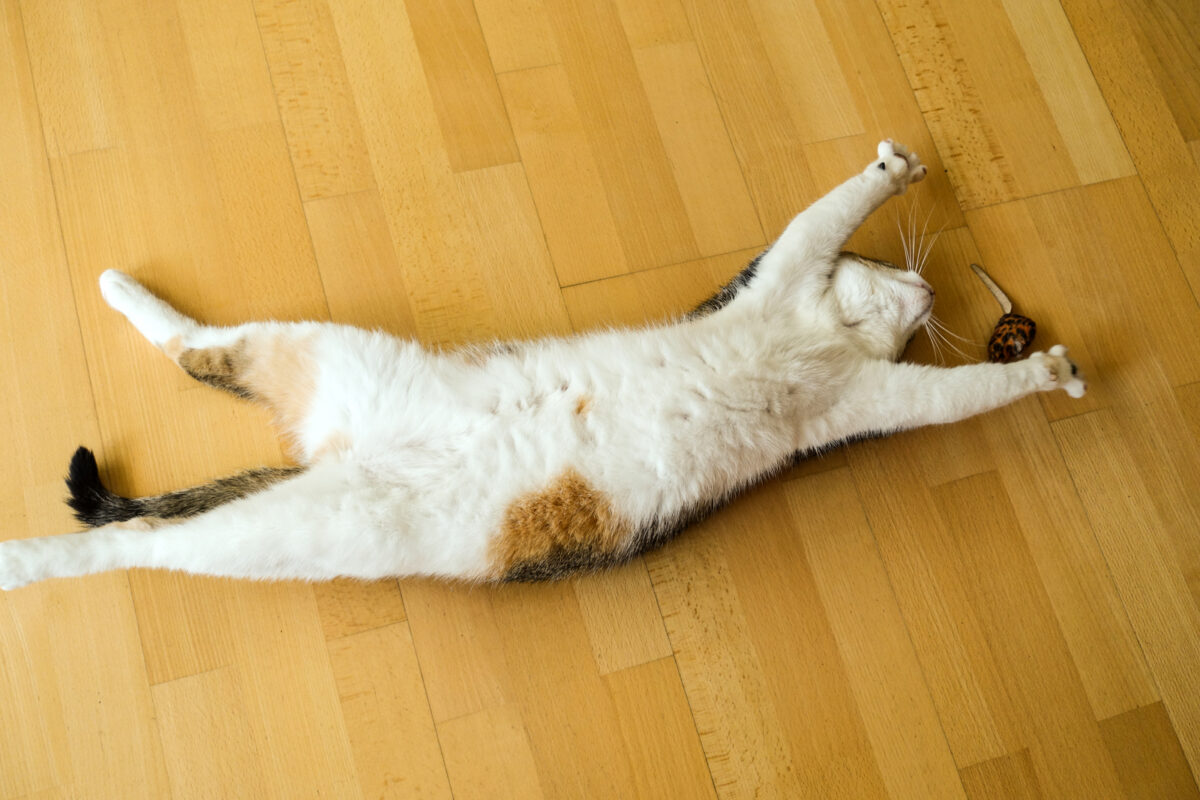
The cat that waits for you to come home every day so he can show you how much he loves you by rolling around on his back all over the dirty floor.

The shop at the market where you can travel the world by sampling all manner of fancy cheeses impaled on toothpicks.

The hidden vista on Toronto’s harbour islands. It’s just a concrete slab squatting ungainly in the water, but its semi-secrecy means almost no one goes there, so you have it to yourself with the best view of the downtown anywhere in the city.

These are the things I think I’ll miss as I wonder which breath will be my last. They take root in your heart when you’re not looking. I’ve been to Paris, Tokyo, New York and plenty of other amazing cities. I’ve seen fabulous museums and wonders of nature, and there are countless more that would take my breath away. But no memory of these wonders will break my heart as I say goodbye to this world, the way the memories of my life’s constant companions will. I like to think of those little things as good friends I choose to spend time with, instead of the big, bright shiny things I could spend time chasing down.

That’s why I’m taking time to live the little things, in case I realize one day it’s too late to live them any more.

The chocolate shop where I know exactly which four absurdly expensive truffles I’ll get, and are worth every cent.

Strolling through ritzy neighbourhoods in early spring, wondering what it’s like to have that kind of money, but not caring too much about it.

Greeting every dog in the elevator with “Hello, puppy!” because I secretly hope that’s a signal to the owner to let me pet them.

I remember an article from ten years ago about the regrets of the dying. Nowhere did it mention, “I wish I had climbed Kilimanjaro.” It talked about having the courage to live life on your terms, staying in touch with friends, not working so hard, things like that. Kilimanjaro is no doubt a life-enriching experience, but life isn’t built out of mountains. Thanks to social media, our culture now fetishizes dramatic selfies staged in front of ruined temples, mountains, desert landscapes, expensive restaurants and other exotic locales. Sure, I will make time in my life for them; they’re amazing and wonderful and give me perspective about what awaits us in the world outside the 9-to-5.

But I feel confident no one posing in front of the Amalfi coast on Instagram is going to reach for their phone as life draws to a close, gaze longingly at that picture and whisper, “No regrets!” I think that person will understand that life isn’t built on drama: it’s built on the quiet magic of little things.

Originally published in the Globe and Mail.